 Merken
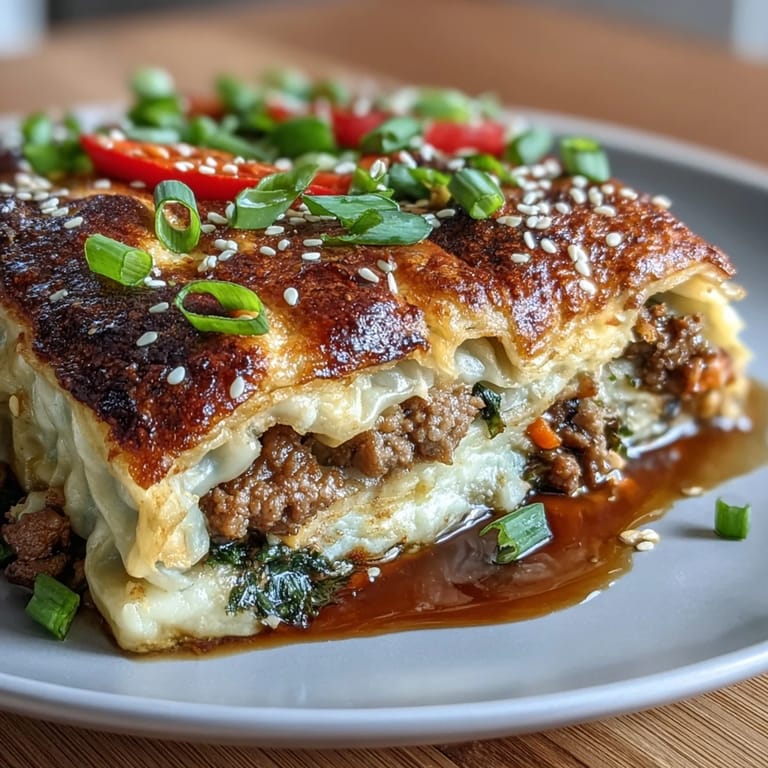
 My friend Marco called me at midnight with a wild idea: what if lasagna could taste like the dumplings we'd devoured at that tiny restaurant in Chinatown last week? I laughed it off, but then I couldn't stop thinking about it. A week later, I found myself layering dumpling wrappers instead of pasta sheets, and somehow it worked—better than either of us expected. That first bite told me we'd stumbled onto something special, something that felt both completely new and somehow inevitable.
I made this for my sister's potluck after she'd spent weeks talking about being bored with her usual dinner rotation. When she took her first bite, she went quiet—that good kind of quiet where you know something unexpected just happened. She ended up taking home three containers of leftovers, and now it's the dish everyone asks her to bring.
Ingredients
- Dumpling or wonton wrappers (24): These replace pasta sheets and give you a tender, slightly chewy layer that soaks up all the sauce flavor without getting mushy if you handle them gently.
- Ground pork or chicken (500 g): Choose whichever you have on hand—pork gives richer flavor but chicken keeps things lighter and cooks just as fast.
- Vegetable oil (1 tablespoon): Just enough to prevent sticking without making the filling greasy.
- Onion, garlic, and ginger (1 onion, 3 cloves, 1 tablespoon): This trio is the flavor foundation that makes everything taste authentic and vibrant.
- Carrot and red bell pepper (1 medium carrot, 1 pepper): The julienned carrot and thin slices cook quickly and add natural sweetness without overpowering the other flavors.
- Napa cabbage (150 g): It wilts down dramatically and adds a delicate crunch that survives the baking.
- Soy sauce, hoisin, and rice vinegar (2 tablespoons, 1 tablespoon, 1 tablespoon): This combination creates the savory-tangy backbone that ties the whole filling together.
- Sesame oil (1 teaspoon in filling, 1 tablespoon in sauce): Use it sparingly—a little goes a long way and adds that unmistakable depth.
- Mozzarella and cheddar cheese (200 g mozzarella, 100 g cheddar): The mozzarella melts smoothly while cheddar adds a slight sharpness that complements the Asian flavors beautifully.
- Spring onions and sesame seeds (for garnish): These finish the dish with fresh color and texture that makes it look as good as it tastes.
- Low sodium soy sauce (120 ml): The sauce's main ingredient, so using a quality brand makes a real difference.
- Fresh ginger and garlic (1 tablespoon ginger, 2 teaspoons garlic): Fresh versions are essential here—they brighten the sauce with clean, punchy flavor.
- Honey or brown sugar (1 tablespoon): Just a touch to balance the saltiness and add subtle warmth.
- Chili flakes (1 teaspoon, optional): Add these only if you want heat; they're not necessary for the core flavor.
- Cornstarch slurry (2 teaspoons cornstarch plus 2 tablespoons water): This thickens the sauce so it clings to every layer instead of pooling at the bottom.
Tired of Takeout? 🥡
Get 10 meals you can make faster than delivery arrives. Seriously.
One email. No spam. Unsubscribe anytime.
Instructions
- Prepare your workspace:
- Preheat your oven to 180°C and lightly grease your 9x13 inch baking dish while you work through the next steps. Everything moves quickly once you start cooking, so having everything ready prevents last-minute scrambling.
- Build the flavor base:
- Heat vegetable oil in a large skillet over medium heat, then add your chopped onion, minced garlic, and grated ginger. You'll know they're ready when the kitchen smells intensely aromatic—about 2 minutes—which is the signal that everything is starting to come together beautifully.
- Cook the meat:
- Add your ground pork or chicken and break it apart with a spoon or spatula as it browns, which takes about 5-7 minutes total. Don't rush this—you want the meat to develop color and lose all its pinkness, which means the flavors are setting in properly.
- Add the vegetables:
- Stir in your julienned carrot, sliced bell pepper, and shredded napa cabbage, cooking for about 3-4 minutes until they soften slightly but still have some texture. They should smell bright and slightly sweet, not soft or mushy.
- Season the filling:
- Pour in the soy sauce, hoisin, rice vinegar, and sesame oil, stirring everything together and cooking for 2 more minutes until the liquids reduce slightly. Taste a tiny spoonful—it should taste bold and well-seasoned, with layers of salty, tangy, and slightly sweet.
- Create the sauce:
- While the filling cooks, combine all your sauce ingredients except the cornstarch slurry in a medium saucepan and bring to a gentle simmer. The aroma will fill your kitchen with that distinctive ginger-soy fragrance that makes you know something delicious is happening.
- Thicken the sauce:
- Whisk your cornstarch slurry (the mixture of cornstarch and cold water) into the simmering sauce and cook for about 1-2 minutes, stirring constantly, until it thickens enough to coat a spoon. You want it thick enough to stay on the layers without running everywhere, but still pourable.
- Assemble the first layer:
- Spread a thin layer of soy ginger sauce across the bottom of your prepared baking dish, then arrange 8 dumpling wrappers to cover the base, overlapping them slightly like you would pasta sheets. They might not cover perfectly, and that's fine—any gaps will be filled by the filling.
- Build the first full layer:
- Spread one-third of your cooked meat and vegetable mixture over the wrappers, sprinkle with one-third of your mixed cheeses, and drizzle with sauce. This is where it starts looking like actual lasagna, just with an Asian twist.
- Repeat the layers:
- Add another 8 wrappers, then repeat with another third of the filling, cheese, and sauce. Do this one more time—wrappers, remaining filling, remaining cheese, and a final drizzle of sauce on top so it gets golden and delicious.
- Bake covered:
- Cover your baking dish with aluminum foil and bake for 25 minutes at 180°C. The foil traps steam and helps the dumpling wrappers soften through completely while the filling heats all the way through.
- Finish with color:
- Remove the foil and bake for an additional 10-15 minutes until the top is golden brown and the edges are bubbling vigorously. You'll see the cheese melt and brown slightly, which is exactly what you want.
- Rest before serving:
- Let the dish sit for 10 minutes out of the oven—this lets everything settle and makes serving so much easier. Top with sliced spring onions and sesame seeds right before bringing it to the table.
 Merken
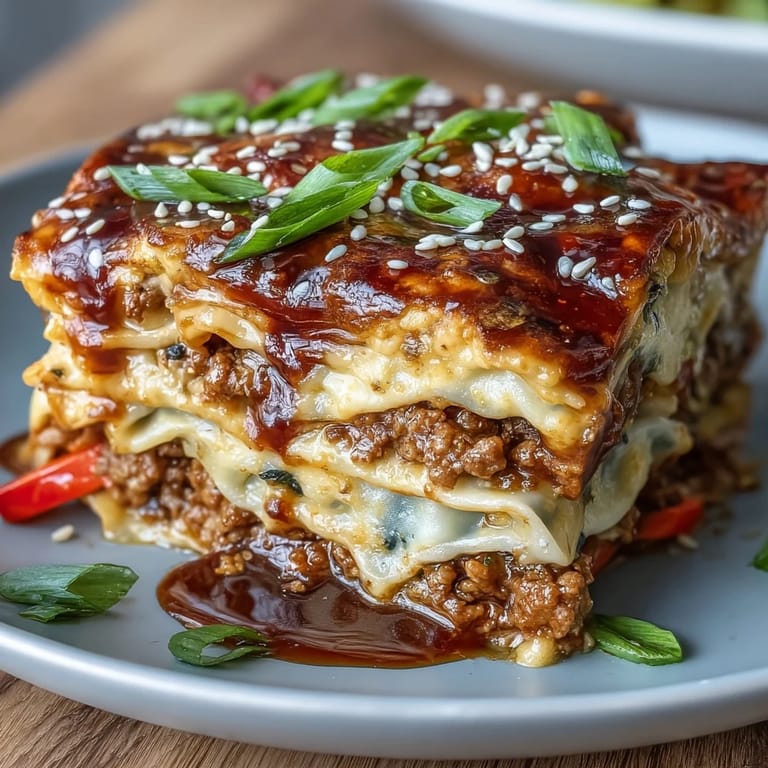
 My neighbor smelled this baking and actually knocked on my door asking what I was making. We ended up sharing a piece at my kitchen counter, and she admitted she'd never thought of Asian flavors and lasagna existing in the same dish before. Sometimes the best food discoveries happen by accident, just by being willing to break the rules a little.
Why The Dumpling Wrapper Works So Well
The first time I made traditional lasagna with dumpling wrappers, I was nervous they'd either disintegrate or taste weird. Instead, they softened into something almost delicate compared to pasta, absorbing the sauce flavors while staying tender. The thin dumpling wrapper has more surface area too, so every bite is wrapped in flavor without feeling heavy or doughy like lasagna can sometimes be. It's the kind of ingredient swap that makes you wonder why nobody thought of it sooner.
Building Flavor Layers That Actually Work
This dish works because each component pulls its weight—the filling brings umami and texture, the sauce adds brightness and body, the cheese brings richness and helps bind everything together. I learned early on that you can't just dump everything on at once; the order matters because each layer needs to contribute something different. The soy-ginger sauce is what ties everything together, so don't skip making it fresh just because bottled sauce exists. When you taste the finished dish, you should notice the interplay between the savory meat, the crisp vegetables, the tender cheese, and that sharp-sweet-spicy sauce hitting your palate all at once.
Variations And Customizations That Keep It Fresh
I've made this at least a dozen times now, and I'm never bored because there are so many directions you can take it. Vegetarians swap the meat for finely chopped mushrooms or crumbled tofu and honestly, it's just as satisfying. The beauty of this format is how forgiving it is—you can sneak in spinach, bok choy, snap peas, or whatever green vegetable is sitting in your crisper drawer. One time I added a thin layer of cream cheese mixed with a bit of sriracha between the filling and cheese, and it elevated everything to a level I didn't expect.
- Try adding a thin spread of cream cheese mixed with sriracha between some layers for extra richness and heat.
- Fresh shiitake mushrooms minced finely work beautifully if you're going vegetarian or just want to add more depth.
- A handful of chopped cilantro mixed into the filling at the end adds brightness that surprises people in the best way.
 Merken
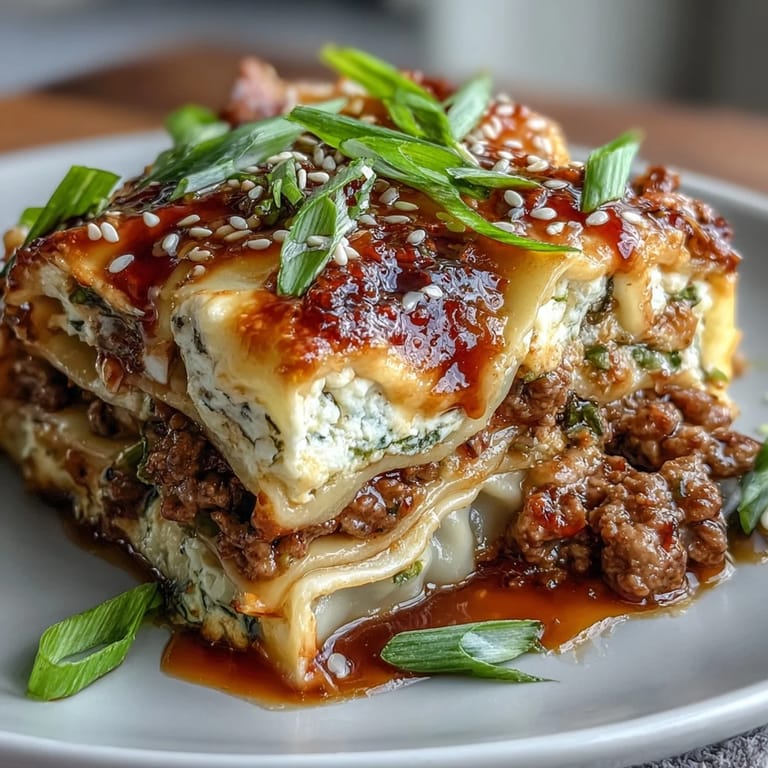
 This dish taught me that the best recipes are the ones that make you question what you thought was possible, then prove you were wrong. It's comfort food that doesn't feel heavy, familiar fusion that still surprises, and honestly, one of my favorite things to make when I want to feel like I'm doing something creative in the kitchen.
Fragen und Antworten zum Rezept
- → Welche Fleischsorten eignen sich am besten?
Hackfleisch von Schwein oder Huhn funktioniert hervorragend und sorgt für saftige Füllung mit viel Geschmack.
- → Kann man frisches Gemüse hinzufügen?
Ja, neben Karotten und Paprika passen auch Spinat oder Pak Choi sehr gut für extra Frische und Biss.
- → Wie lange sollte die Soja-Ingwer-Sauce kochen?
Die Sauce wird nur wenige Minuten gekocht, bis sie durch die Maisstärke eingedickt ist und samtig glänzt.
- → Welche Käsekombination wird verwendet?
Mozzarella für die cremige Textur und Cheddar für würzigen Geschmack schaffen die perfekte Mischung.
- → Wie wird die Lasagne vor dem Backen geschichtet?
Abwechselnd Dumpling-Blätter, Fleisch-Gemüse-Mischung, Käse und Soja-Ingwer-Sauce in drei Schichten aufbauen.
- → Kann das Gericht vegetarisch zubereitet werden?
Ja, Fleisch lässt sich durch fein gehackte Pilze oder Tofu ersetzen, ohne Geschmackseinbußen.