 Merken
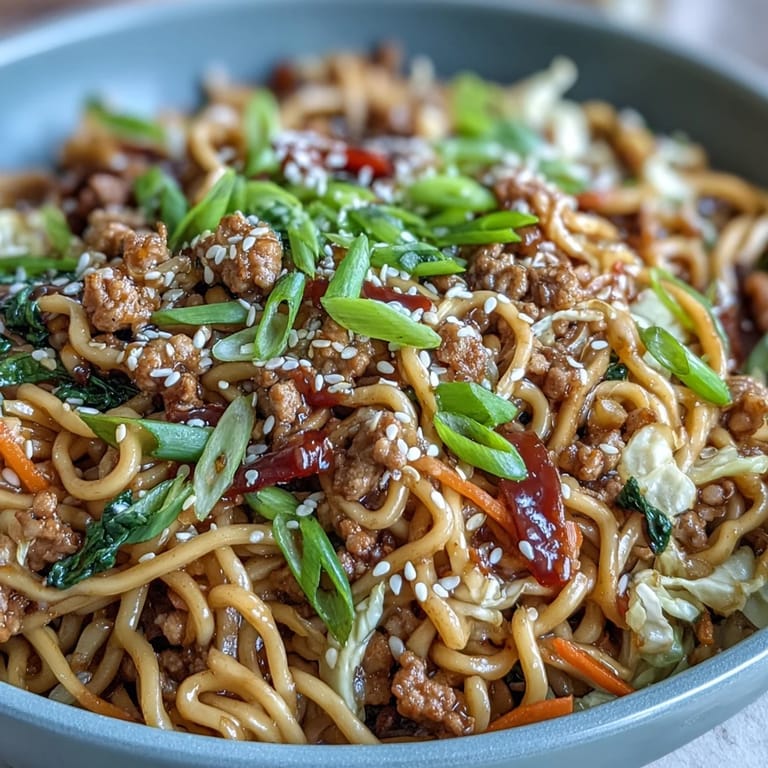
 Korean Turkey Fried Noodles are a vibrant and satisfying fusion dish that brings together the lean protein of ground turkey with the bold, spicy-sweet notes of Korean cuisine. This quick 35-minute meal combines tender wheat noodles and crisp vegetables in a savory glaze that is perfect for a busy weeknight dinner.
Merken The key to this dish lies in the balance of the sauce, where the heat of gochujang meets the sweetness of brown sugar and the aromatic punch of fresh ginger and garlic. Combined with crunchy Napa cabbage and colorful peppers, every bite offers a delightful mix of textures.
Ingredients
Tired of Takeout? 🥡
Get 10 meals you can make faster than delivery arrives. Seriously.
One email. No spam. Unsubscribe anytime.
- Proteins: 1 lb (450 g) ground turkey
- Noodles: 10 oz (280 g) fresh or dried wheat noodles (e.g., udon or ramen)
- Vegetables: 1 cup shredded carrots, 1 red bell pepper (thinly sliced), 1 small onion (thinly sliced), 2 cups Napa cabbage (shredded), 2 green onions (sliced)
- Sauce: 3 tbsp soy sauce, 2 tbsp gochujang, 1 tbsp sesame oil, 1 tbsp brown sugar, 2 cloves garlic (minced), 1 tbsp rice vinegar, 1 tsp freshly grated ginger
- Garnish: 1 tbsp toasted sesame seeds, extra sliced green onions
Instructions
- Step 1: Prepare the sauce
- In a small bowl, whisk together soy sauce, gochujang, sesame oil, brown sugar, garlic, rice vinegar, and ginger to create the sauce. Set aside.
- Step 2: Cook the noodles
- Cook the noodles according to package instructions. Drain and rinse under cold water. Set aside.
- Step 3: Brown the turkey
- Heat a large skillet or wok over medium-high heat. Add a drizzle of oil, then add the ground turkey. Cook for 4–5 minutes, breaking it apart, until browned and cooked through.
- Step 4: Stir-fry vegetables
- Add onion, carrots, and bell pepper. Stir-fry for 2–3 minutes until slightly softened. Add the cabbage and stir-fry for another 2 minutes.
- Step 5: Sauce the mixture
- Pour in the prepared sauce and toss to coat the turkey and vegetables.
- Step 6: Toss and finish
- Add the cooked noodles to the skillet. Toss everything together and stir-fry for another 2–3 minutes until the noodles are heated through and well-coated.
- Step 7: Garnish
- Remove from heat. Garnish with sesame seeds and extra green onions if desired. Serve hot.
Zusatztipps für die Zubereitung
To prevent the noodles from becoming mushy, ensure you rinse them under cold water immediately after cooking. Using a high heat for the stir-fry will help maintain the crispness of the carrots and bell peppers.
Varianten und Anpassungen
If you prefer a different protein, ground chicken or beef works perfectly. To make the dish gluten-free, use gluten-free tamari instead of soy sauce and opt for rice noodles.
Serviervorschläge
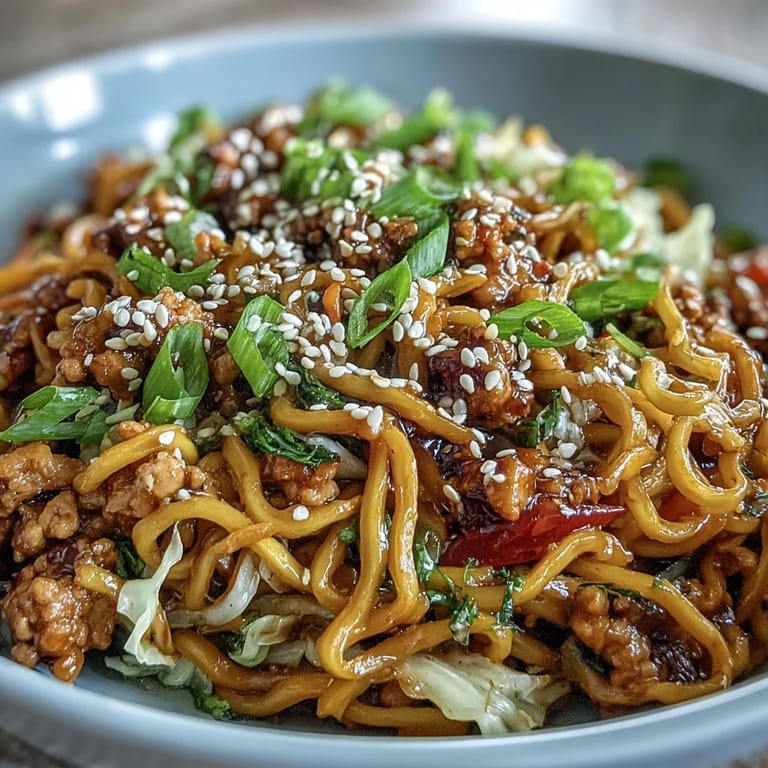
Serve these noodles hot, topped with an extra sprinkle of toasted sesame seeds. This meal pairs wonderfully with a light, crisp lager or a glass of chilled soju to complement the spicy Korean flavors.
 Merken
 With its balance of savory turkey and spicy gochujang, these Korean Turkey Fried Noodles are a fantastic way to bring the flavors of Korean fusion into your home kitchen. Enjoy this easy-to-make dish that is as nutritious as it is flavorful.
Fragen und Antworten zum Rezept
- → Was ist Gochujang und wo bekomme ich es her?
Gochujang ist eine koreanische Chili-Bohnenpaste, die aus fermentierten Sojabohnen, Reis und Chilis hergestellt wird. Sie ist in gut sortierten Supermärkten, Asia-Läden oder online erhältlich und verleiht dem Gericht sein charakteristisches Aroma.
- → Kann ich die Nudeln vorbereiten?
Ja, die Nudeln können am Vortag gekocht und im Kühlschrank aufbewahrt werden. Vor dem Servieren kurz in der Pfanne erhitzen und mit der Soße vermischen.
- → Wie mache ich das Gericht glutenfrei?
Ersetzen Sie Weizennudeln durch Reisnudeln und verwenden Sie stattdessen Tamari anstelle von Sojasauce. Achten Sie darauf, dass auch der Gochujang glutenfrei ist.
- → Wie scharf wird das Gericht?
Das Gericht hat eine milde bis mittlere Schärfe. Für mehr Wärme fügen Sie zusätzliches Gochujang oder Gochugaru (koreanische Chiliflocken) hinzu.
- → Welche Alternativen zu Pute funktionieren?
Hühnchen oder Rindfleisch eignen sich hervorragend als Alternative. Tofu ist eine gute vegetarische Option und sollte goldbraun angebraten werden.
- → Wie bewahre ich Reste auf?
Reste können bis zu 3 Tage im Kühlschrank in einem luftdichten Behälter aufbewahrt werden. Vor dem Servieren in der Pfanne oder Mikrowelle erhitzen.