 Merken
 Last summer, a friend showed up at my door with this beautiful board of vegetables and cheeses, and I realized I'd been overthinking lunch. She just grabbed what was in her fridge, arranged it like she was composing art, and suddenly everyone wanted to stay longer just to keep snacking. That's when it clicked—the best meals aren't always cooked, they're curated.
I made this for a work potluck once, thinking it wouldn't compete with hot dishes. Instead, people kept circling back to the board all afternoon, mixing combinations I'd never thought of. One colleague dunked a piece of cheddar in hummus and declared it life-changing, and honestly, she wasn't wrong.
Ingredients
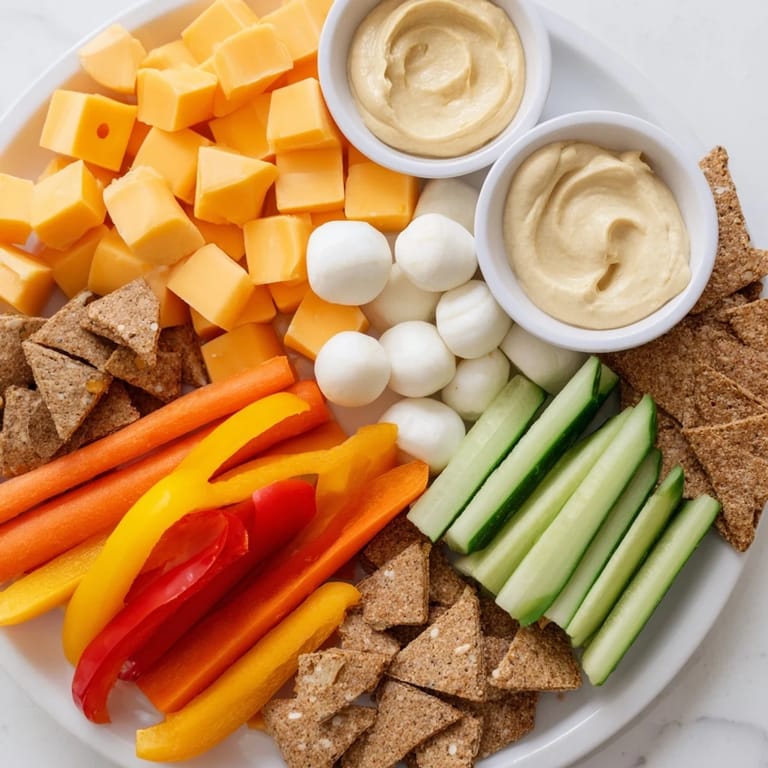
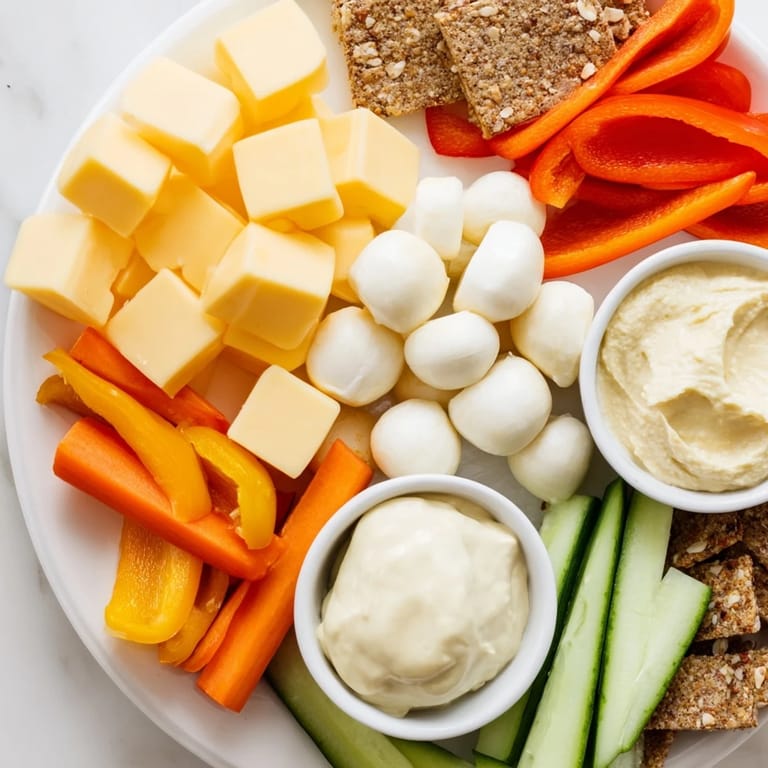
- Baby carrots: Keep them whole for dipping or slice them lengthwise if you want them to feel more intentional on the board.
- Cucumber slices: Pat them dry after slicing so they don't weep water onto everything else.
- Cherry tomatoes: Look for ones that are ripe but still firm, and leave them whole for visual appeal.
- Bell pepper strips: Mix the colors for a reason—it makes people's eyes land on different parts of the board.
- Sugar snap peas: These are the gateway vegetable for people who claim they don't like vegetables.
- Hummus: Use a brand you actually like because this isn't about being virtuous, it's about it being delicious.
- Ranch dressing or Greek yogurt dip: Greek yogurt is the smarter choice nutritionally, but ranch has a charm all its own.
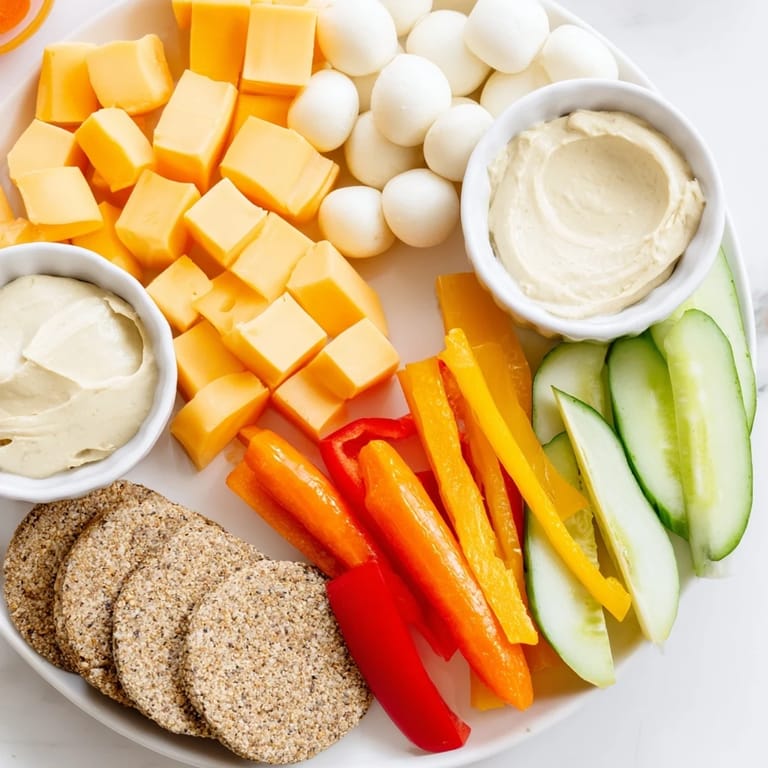
- Cheddar cheese, cubed: Cut into roughly half-inch cubes so they're easy to grab and pair with other things.
- Mozzarella balls: They're mild and creamy, the crowd-pleaser of the cheese world.
- Gouda or Swiss cheese, sliced: These add depth and a slight sweetness that makes the board feel more thoughtful.
- Whole grain crackers: Choose ones with texture; they should be something you'd want to eat on their own.
- Roasted nuts: Toast them yourself if you have time, but good quality store-bought works too.
- Olives: The briny punch that makes people realize they actually like olives more than they thought.
- Dried fruit: A handful scattered around bridges sweet and savory in a way that feels sophisticated.
Tired of Takeout? 🥡
Get 10 meals you can make faster than delivery arrives. Seriously.
One email. No spam. Unsubscribe anytime.
Instructions
- Wash and dry everything:
- Wet vegetables make the board sad and soggy. A salad spinner is your friend, or just pat things dry with paper towels while you're thinking about the day.
- Map your board like you're planning a city:
- Start with vegetables in sections, leaving room to breathe. You're not trying to fill every inch; white space matters.
- Nest the dips in small bowls:
- This keeps them from getting mixed with other flavors and makes people feel like they're uncovering little treasures.
- Cluster the cheeses together:
- Group by type or just by color if that makes you happy. Cheese grouped alone looks lonely.
- Fill the gaps with intention:
- Crackers, nuts, and dried fruit go in the spaces between, creating little flavor combinations waiting to be discovered.
- Step back and look at it:
- If it looks good to you, it's good. If something feels off, shift things around until it feels balanced.
 Merken
 My daughter once arranged her own veggie board for a friends' gathering, and watching her make choices about placement and flavor combinations made me realize this is how people learn to cook—by playing with food without fear of failure. A board can't burn or taste bad; it can only teach you what you like.
The Art of Board Design
A good board tells a story through color and balance. Think about the different textures—creamy dips, crunchy crackers, soft cheese, snappy vegetables—and make sure they're scattered so every bite feels different. The best boards aren't symmetrical; they're generous and a little wild, like you reached into your kitchen and grabbed what felt right.
Making It Feel Special
The truth is, this isn't really about the ingredients. It's about giving people permission to graze, to mix flavors however they want, to spend time talking instead of sitting down to eat. I've learned that the simplest meals are often the ones people remember most because there's nothing between them and enjoying each other's company.
Endless Possibilities
Once you understand the formula, you can make a different board every time based on what's fresh or what you're craving. I've made boards with stone fruit and prosciutto in summer, roasted vegetables and brie in winter, and spicy versions with jalapeños and hot salsa on random Thursdays. The point is flexibility.
- Add hard-boiled eggs, sliced deli meats, or even cured fish if you want more protein.
- Use whatever cheeses are on sale or in your fridge; this isn't precious.
- Try different dips—romesco, whipped feta, or even a good pesto—and see what sticks.
 Merken
 This board has become my answer to almost everything—unexpected guests, meal prep, something to do with your hands while talking. It's given me permission to cook less and enjoy more.
Fragen und Antworten zum Rezept
- → Welche Gemüse eignen sich für das Snackboard?
Frisches Gemüse wie Karotten, Gurkenscheiben, Cherrytomaten, Paprikastreifen und Zuckerschoten eignen sich hervorragend durch ihre Farben und knackige Textur.
- → Welche Dips passen gut zu diesem Teller?
Hummus und Ranch-Dressing oder griechischer Joghurt-Dip bieten cremige Begleiter, die die frischen Gemüsesorten geschmacklich unterstreichen.
- → Wie kann das Board vegan gestaltet werden?
Für eine vegane Variante empfiehlt sich der Austausch der Käsesorten gegen pflanzliche Käsealternativen und Dips ohne Milchprodukte.
- → Welche Texturen bringt das Board zusätzlich ins Spiel?
Knackige Cracker, geröstete Nüsse sowie getrocknete Früchte ergänzen die weichen und frischen Zutaten um interessante Kontraste.
- → Wie lange ist das Snackboard frisch haltbar?
Das Board schmeckt frisch am besten und sollte nach der Zubereitung zeitnah verzehrt oder abgedeckt im Kühlschrank aufbewahrt werden.